
Quick answer: A sublimated jersey is a polyester garment whose design is printed onto transfer paper and then heat-pressed so the ink turns into a gas and bonds with the fibers. The print becomes part of the fabric, so it will not crack, peel or fade like vinyl or screen print. It allows unlimited colors and full-garment designs.
Dye sublimation is the most common way to decorate custom team jerseys today, from hockey and lacrosse to soccer and fishing shirts. Buyers hear the word constantly, but few have seen how it works. Here is what happens to your design on its way to becoming a finished jersey in our Shenzhen factory, and what sublimation can and cannot do.
What Makes Sublimation Different
Most decoration methods sit on top of the fabric. Screen printing deposits a layer of ink, heat-transfer vinyl glues a film to the surface, and embroidery stitches thread through it. Sublimation works differently: under heat and pressure, special dye inks turn from a solid into a gas and are absorbed into polyester fibers. When the fabric cools, the dye is locked inside. You can run your hand over a sublimated jersey and feel nothing but fabric.
Step-by-Step: How a Sublimated Jersey Is Made
Step 1: Design and pattern layout
The process starts with your artwork. Our designers build the jersey on digital pattern pieces (front, back, sleeves, collar) for every size, placing logos, numbers and names exactly where they will appear on the finished garment. Because each size has its own pattern, a design is checked to make sure logos stay proportional from youth to adult sizes.
Step 2: Printing on transfer paper
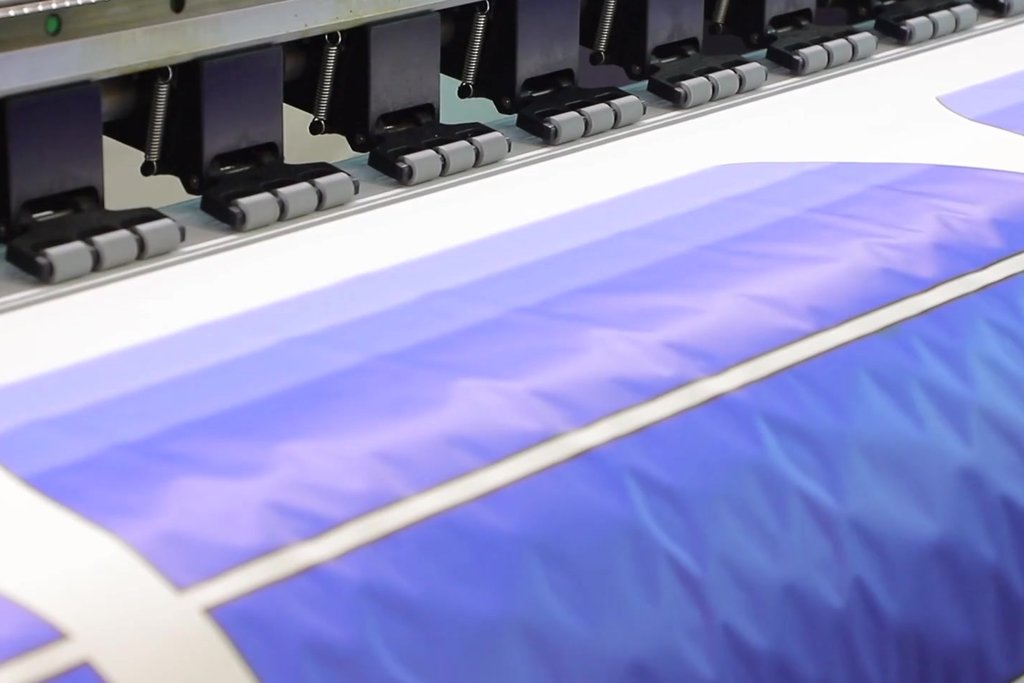
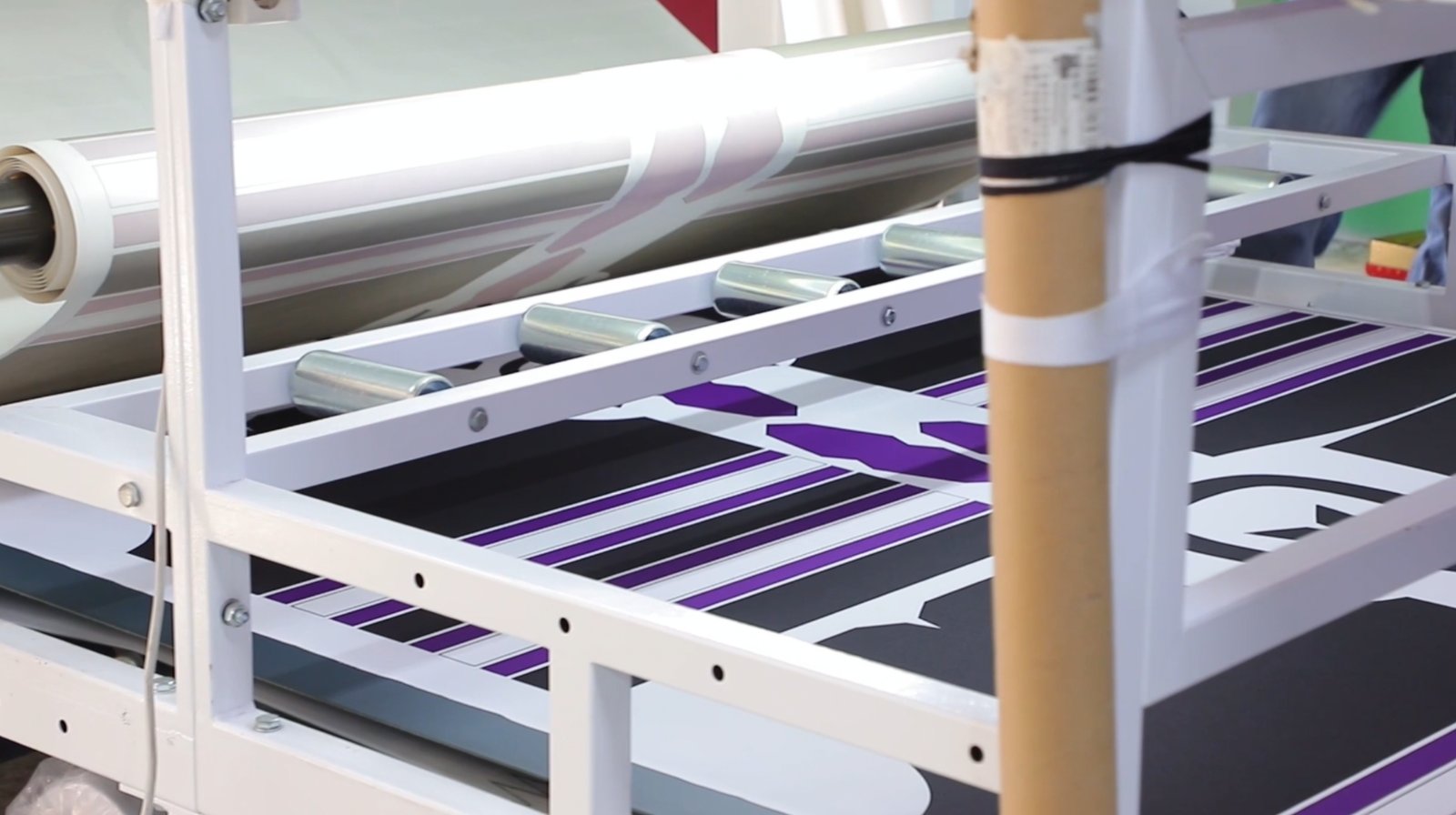
The laid-out pattern pieces are printed in mirror image onto sublimation transfer paper using wide-format printers. Color management matters here: the printer profile has to translate screen colors into ink accurately, which is why we always recommend approving a physical sample.
Step 3: Heat transfer
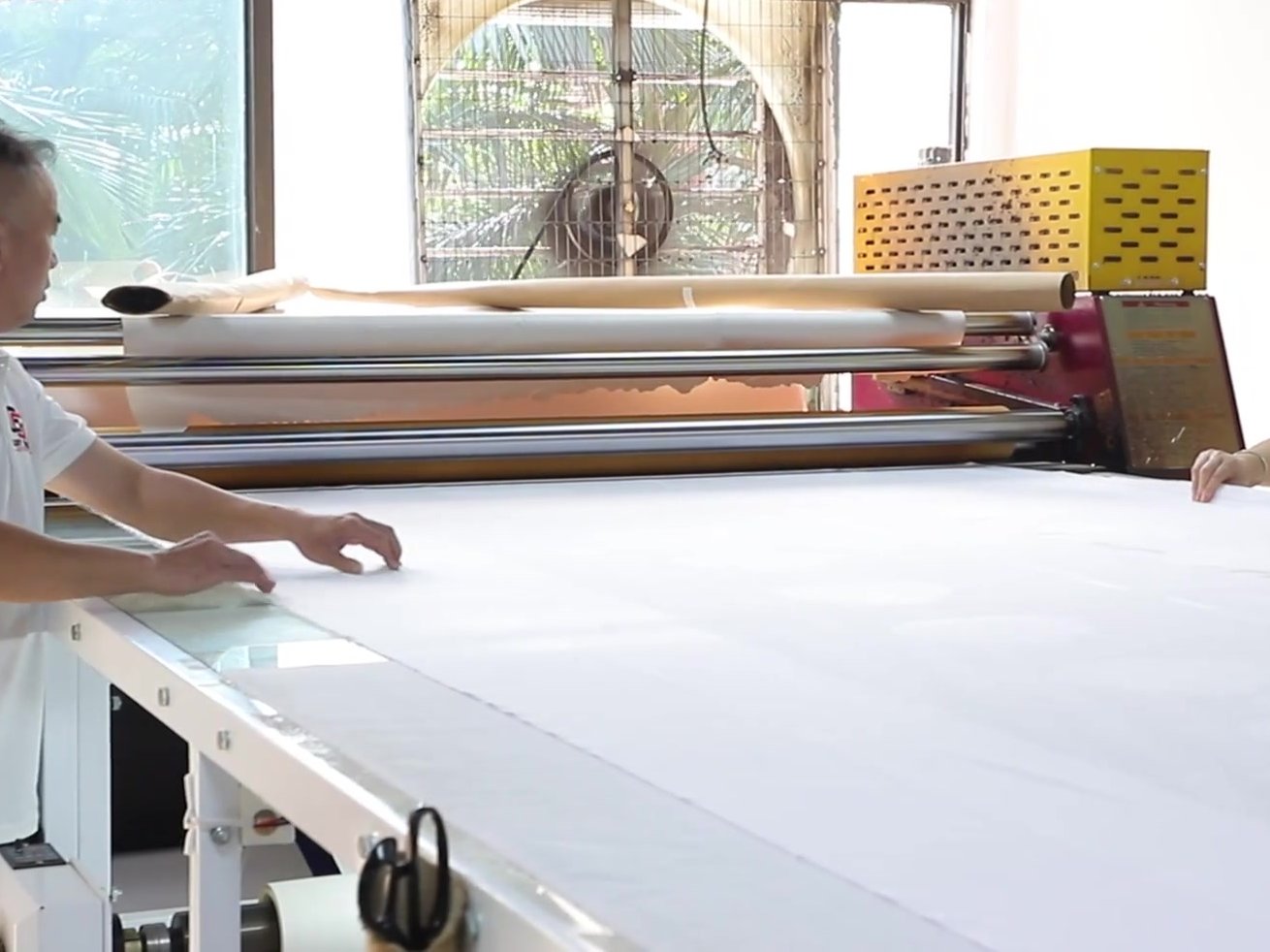
The printed paper is placed against white polyester fabric and run through a heat press or calender. High heat and pressure turn the dye into gas, which bonds with the fibers. The paper comes away nearly blank, and the full-color design is now part of the fabric.
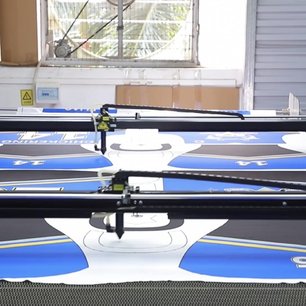
Step 4: Cutting the panels
The printed fabric is cut into individual pattern pieces. Precision matters, because a few millimeters off can shift a stripe or crop a logo at the seam. Automated and laser cutting keep panels consistent across a full roster.
Step 5: Sewing and finishing
Panels are sewn together, details such as collars, cuffs, fight straps or hems are added, and each jersey goes through quality checks for print alignment, seams, sizing and roster accuracy before packing.
Advantages of Sublimated Jerseys
- Unlimited colors: gradients, photos, camouflage and complex patterns cost no more effort than a single color.
- Durability: the print cannot crack or peel, because there is no layer on the surface.
- Light and breathable: no added weight or plastic film, which matters for high-intensity sports.
- Full personalization: every jersey in a design can carry its own name and number.
- Small runs: there are no screens to set up, which is one reason our MOQ is 10 pcs per design.
Limitations to Know
- Polyester only: sublimation needs polyester or high-polyester blends. It does not work on cotton.
- Light base fabric: the dye is printed onto white or light fabric; very dark ground colors are printed, not dyed in the yarn.
- Flat look: if you want a raised, stitched texture, combine sublimation with tackle twill or embroidery. Read our sublimation vs tackle twill comparison for hockey.
How Long Does It Take?
At Glory Ground, a sublimated sample is ready in about 5 days and bulk production takes around 2 weeks after approval. Our Shenzhen factory has more than 10 years of experience and a capacity of 50,000 pieces per month. The polyester fabrics we use are OEKO-TEX certified (23.HCN.91580).
Which Sports Use Sublimation?
Nearly all of them. Browse our sublimated hockey jerseys, soccer jerseys, basketball uniforms, lacrosse uniforms and fishing shirts. For the bigger picture, read inside our factory: from design to shipping.
How to Prepare Artwork for Sublimation
Good artwork makes a good jersey. Send logos as vector files (AI, EPS, PDF or SVG) so they stay sharp at any size. If you only have a raster image, provide the largest, highest-resolution version available. Share brand colors as Pantone references if you have them, because screen colors vary between devices. Tell us about any fonts you want for names and numbers, or let our design team suggest options that read clearly at a distance. Finally, mark anything that must not move, such as a sponsor logo in a fixed position, so it stays consistent across every size.
Sublimation and Color Accuracy
Buyers often ask why a sample can look slightly different from the design on screen. Monitors display color with light, while sublimation reproduces it with ink on fabric, and different fabrics absorb dye slightly differently. That is why we match colors on the physical sample and keep the approved settings for bulk. If brand color is critical, send a physical reference such as an existing garment or a Pantone code, and approve the sample in natural daylight.
Frequently Asked Questions
What is a sublimated jersey?
A polyester jersey whose design is printed on transfer paper and heat-pressed so the dye bonds with the fibers. The print becomes part of the fabric.
Does sublimation crack or fade?
It does not crack or peel because there is no surface layer. With normal care, colors stay vivid for the life of the garment.
Can you sublimate on cotton?
No. Sublimation requires polyester or high-polyester fabric. For cotton garments, other methods such as embroidery are used.
Is sublimation good for small orders?
Yes. There are no screens to set up, so we can produce from 10 pcs per design, with different names and numbers on each piece.
Related Guides
- Sublimation vs Tackle Twill vs Embroidery: Decoration Guide for Every Sport
- Performance Fishing Shirts for Brands: UPF Fabric, Hoods & Private Label Options
- Custom Wrestling Singlets: Fabric, Cuts and Sublimated Designs for Teams
Ready to Start Your Order?
Have a design you want to see sublimated? Send us an inquiry with your sport, quantity per design and artwork or reference images, and our Shenzhen team will reply with a design proposal and sampling schedule.
